
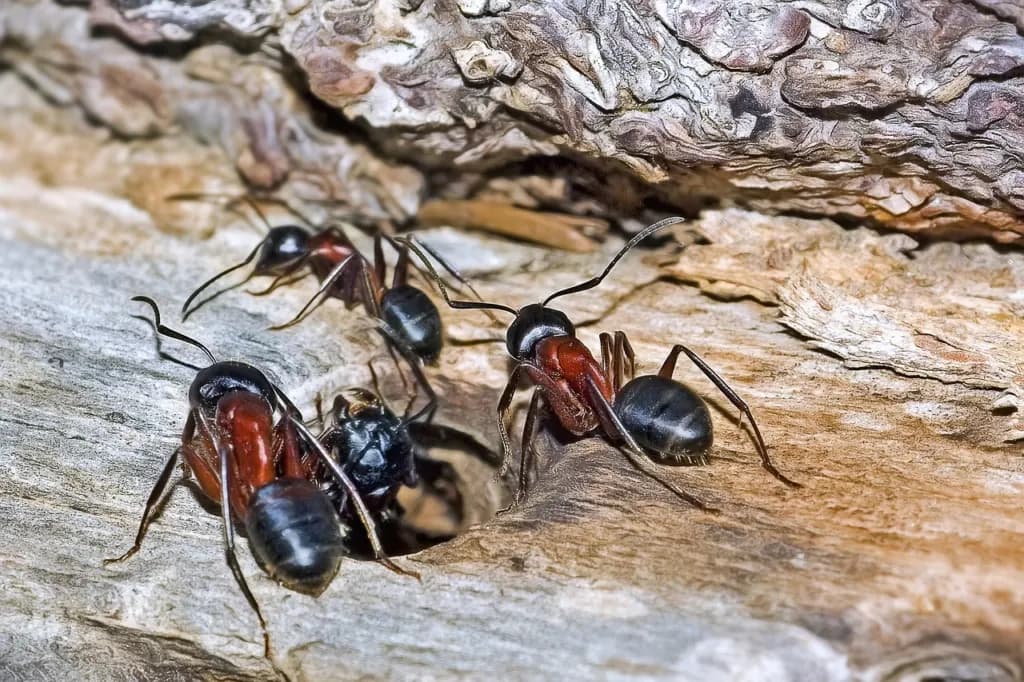
An ant trail across a counter is not a random event. It is the visible output of a colony that has located a resource, evaluated it, and committed workers to exploiting it. Read correctly, the trail tells you a great deal about what you are dealing with.
Read incorrectly — or simply wiped away — it becomes a missed opportunity, because the trail was the clearest path back to the nest you were going to get.
How Trails Form
A scout ant leaves the nest and searches semi-randomly. When it finds something worth having, it returns to the colony laying a pheromone trail as it goes.
Other workers follow that chemical line, find the resource, and reinforce the trail on their own return trip. The stronger the resource, the more workers commit, and the more heavily the trail is marked. This positive feedback loop is why an ant trail can go from one exploratory ant to a steady column within hours.
Two practical consequences follow. First, a strong trail means the colony rates the resource highly. Second, the trail is chemical, not visual — which is why ants keep using the same route even after you clean it, unless the pheromone itself is removed.
What The Direction Tells You
Watch which way the ants are carrying things.
Ants moving *toward* the food source are outbound foragers. Ants moving *away* carrying visible material are returning to the nest. Follow the loaded ants and they will lead you toward the colony — through a gap, along a wall, down a foundation, out to a landscape bed.
This is the single most useful thing a homeowner can do with an ant trail, and it takes ten minutes of patient observation. Most people skip it and spray instead, which destroys the information.
What The Volume Tells You
Trail density is a rough proxy for colony size and commitment.
- A few scattered individuals — exploratory scouting, no established trail yet. The easiest moment to intervene.
- A thin but consistent line — a trail is established and the colony is committed. Still manageable.
- A heavy, continuous column — a large colony with substantial worker numbers, and likely more than one route.
- Multiple trails from different directions — either a very large colony or, more often, multiple colonies or satellite nests.
That last case matters. Some species, including several common in northern Nevada, form multi-nest colonies that share workers across several locations. Treating one nest in that situation accomplishes very little.
What The Route Tells You
Ants follow edges. Trails run along baseboards, counter seams, window frames, wire runs, and pipe lines because those provide tactile guidance and cover.
The route therefore maps the structural pathway into your home:
- A trail along a windowsill points at a gap in the frame or weep hole
- A trail emerging from under a baseboard indicates a wall void route
- A trail following a pipe or wire suggests entry at a utility penetration
- A trail up an exterior wall points at eaves, soffits, or roofline access
Each of those is an entry point that other pests can also use.
What The Timing Tells You
Note when the trail is busiest. Many ant species forage most heavily at dawn and dusk, others at night. Trails that appear suddenly after irrigation or rain often indicate a nest that has been flooded and is relocating.
Persistent activity in a specific room — especially a kitchen or bathroom — combined with moisture is a signal worth taking seriously. Some species nest in wall voids where water has softened the wood, and that means there is a moisture problem behind the ant problem.
Why Spraying The Trail Backfires
This is the most common and most counterproductive response.
A contact spray kills the foragers you can see. It does not reach the colony, which may hold thousands of workers and one or more reproductive queens. Worse, some species respond to chemical stress by budding — splitting the colony and relocating portions of it elsewhere in the structure.
The homeowner sees the trail disappear and concludes it worked. Two weeks later there are trails in two new locations, and the original single colony has become several.
Baiting works with ant behavior rather than against it. Workers carry the material back and distribute it through the colony, including to the queen. It is slower, and it requires leaving the trail intact so the ants can do the delivery — which is exactly why "don't spray it" is the standard advice.
What To Do Instead
- Leave the trail alone long enough to watch where it goes
- Photograph the route and note the entry point
- Remove the food source that is drawing them
- Clean the surface *after* you have traced the route, using soapy water to break the pheromone line
- Get the species identified before treating, because the correct approach differs substantially between them
If you have ant trails in your Reno or Sparks home, contact Peak Pest Control at (775) 446-6199 before you spray. We will identify the species, trace the colony, and treat in a way that eliminates it rather than scattering it.
Dealing with this pest at your place?
Peak serves Reno, Sparks, and northern Nevada with free inspections and a re-treatment guarantee. Get an honest quote, no pressure.
Aspen Chournos
Aspen Chournos writes about high-desert pest pressure and prevention for homes and businesses across Reno, Sparks, and northern Nevada.