Wasp season in Reno runs on a curve that catches people out every year. Queens come out of overwintering in April and spend a few weeks scouting eaves, vents, soffits, and fence rails for nest sites, building something the size of a walnut that nobody notices. By late July that nest has a workforce, and by late August it's at full size and genuinely defensive. Almost every wasp call we take could have been a two-minute job three months earlier.
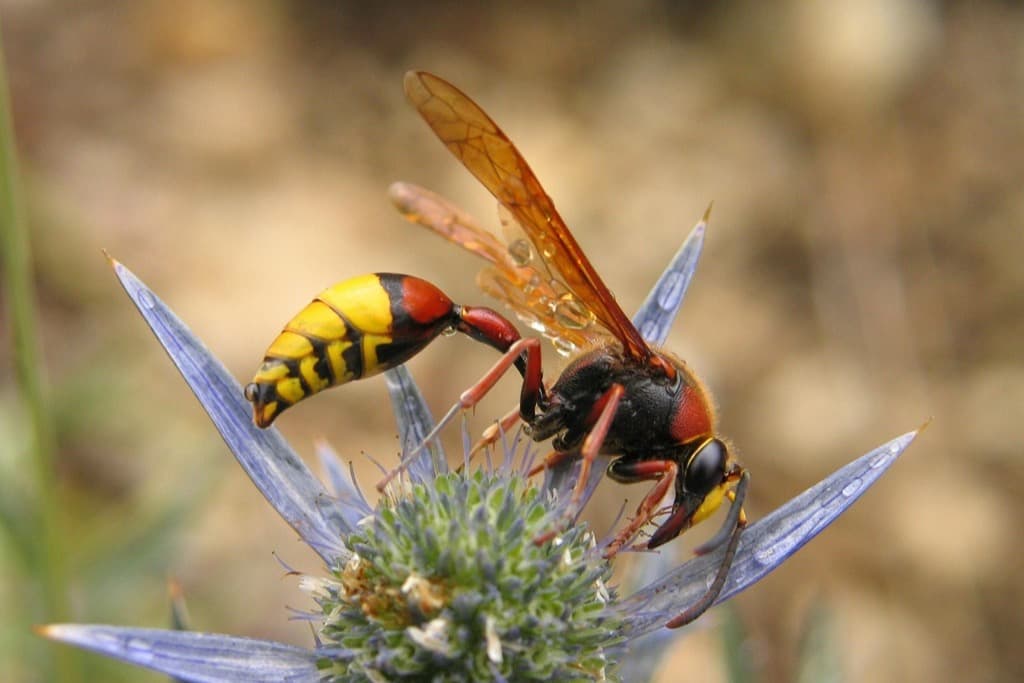
The two species that matter here behave differently enough to change the job. Paper wasps build the open, umbrella-shaped combs you find under eaves and deck rails; they're reluctant to sting unless you're close to the nest. Yellow jackets are the problem: they nest in cavities and in the ground, they're aggressive near the entrance, and a single colony can send dozens at once. A ground nest found by a mower or a curious dog is the most common way people in this valley get stung repeatedly.
Nest removal is one of the few pest jobs where doing it yourself carries real risk, particularly if anyone in the house has a sting allergy. We locate nests, including the hidden and ground ones people miss, treat and remove them with the right protection, and then treat the eaves and fascia they'll try to rebuild on, because the same sheltered south-facing corner gets chosen again next year.
Reno isn't one pest problem, and it isn't one treatment either. These are the parts of the city where this service does the most work, and why.
Damonte Ranch & Double Diamond
89521
Fresh eaves, new soffit gaps, and vinyl fencing are ideal nest framing, and the greenbelt and ponds nearby keep the food supply up. Newer south Reno builds get more paper wasp nests per house than anywhere else in the city, almost always on the sunny side.
Caughlin Ranch & the Southwest
89519
Mature trees and deep deck framing along the Truckee corridor give wasps cover and height, and the irrigated landscaping feeds them through the dry months. Nests here are often well established before anyone spots them, because they're up in foliage rather than on a wall.
East Reno & Hidden Valley
89502
Open sage on the east rim and the regional park boundary mean ground-nesting yellow jackets, which is the version that actually sends people to urgent care. Yards backing onto open ground should be walked before mowing from July onward.
Midtown & the Old Southwest
89509
Old soffits, open attic vents, and wall voids in pre-war housing give yellow jackets exactly the cavities they want, and a nest inside a wall is both harder to find and far worse to get wrong. Activity at a single point on an exterior wall is the tell.
When wasp & hornet control actually gets done here
High-desert pressure is seasonal and it's predictable. Knowing which window you're in is most of knowing what to book.
Queens scoutingApril – May
Overwintered queens are out looking for nest sites and starting small combs. Knocking one down now takes minutes and there's nothing to defend it. This is the cheapest wasp appointment of the year by a wide margin.
Colonies buildingJune – July
Nests have a workforce and are growing fast, and ground nests are becoming a real hazard in yards backing onto open ground. Still very manageable, and worth dealing with before the patio season you actually want to use.
Peak and defensiveAugust – September
Full-size nests, maximum workers, shortest tempers, and yellow jackets turning up at patios, bins, and anywhere food is outdoors. This is when nearly all our wasp calls come in and when removal genuinely needs protective gear.
If the pests come back, so do we.
Free re-treats between scheduled visits, no questions, no extra invoice. That’s the Peak Promise.
“Peak always comes out as soon as there's an issue, which isn't often thanks to how good a job they do. Devan treated for ants, spiders, and wasps, on time and professional.”
MO
Michael O.
Google review
“Kelly was very thorough removing old wasp nests and treating for spiders and ants. She even walked through the snow to reach the perimeter of our yard.”
MS
Madelyn S.
Google review
“Jacob is an excellent technician, explaining what he does and why. He even gave advice on which bushes and trees attract certain insects. Informative and experienced.”
CJ
Cynthia J.
Google review
From our blog
More on wasp & hornet control in Reno
Written for northern Nevada specifically, not generic advice pulled from somewhere with a different climate.
Warm weather sends wasps hunting for food, water, and protected nesting spots around your home. Here's what draws them in, and when it means a nest is nearby.
There's a nest under my eave. Can you come out today?
Usually, yes. Call before noon and we'll do our best to have someone out that afternoon; most Reno addresses are about fifteen minutes from our office. In the meantime, keep people and pets away from the area and don't try to knock it down or spray it yourself, especially in late summer. A disturbed nest at full size can send dozens of wasps at once.
How do I tell a yellow jacket problem from paper wasps?
Look at where they're going. Paper wasps build an open, downward-facing comb you can see, usually under an eave, a deck rail, or a patio cover, and they come and go from all over it. Yellow jackets disappear into a single point, a hole in the ground, a gap in the siding, a soffit vent, with steady two-way traffic like an airport. That single entry point with heavy traffic is the one to take seriously and not to approach.
Do wasps come back to the same spot every year?
Not the same nest, but very often the same spot. Wasps don't reuse an old nest, though a new queen will pick the same sheltered, sunny corner because the reasons it was good haven't changed. That's why we treat the eaves and fascia after removal rather than just taking the nest down. It's also why the second year on a property is usually much quieter than the first.
What about a nest inside the wall?
That needs doing properly and it's not a DIY job. Sealing the entrance with a colony still inside is the classic mistake, because they'll chew through into the living space rather than give up. We treat through the entry point, let the colony collapse, and then seal it once there's no activity. In the older housing in Midtown and the Old Southwest this is a fairly regular call, so it's a well-worn procedure rather than an unusual one.
How much does wasp & hornet control cost in Reno?
Nest removal is usually a single-visit job, quoted by how many nests there are and how hard they are to reach, and knocked down on the spot where we can. Nests on the property are also covered on the recurring plans, which is why people on a plan rarely notice wasp season at all. Either way you get the number before any work starts, and there's no trip charge for Reno: our office is about fifteen minutes from most addresses in the city, so it's a routine stop rather than a special trip.
What does a wasp & hornet control visit in Reno cover?
Every visit covers: locating nests, including hidden and ground nests; safe treatment and removal with proper protection; knockdown of accessible nests; preventive eave treatment to stop rebuilds. What changes by address is the weighting. Damonte Ranch & Double Diamond and Caughlin Ranch & the Southwest are two different jobs, so the technician decides on site where the time is best spent rather than running the same checklist everywhere.
Free Estimate
Ready to reach peak pest-free living?
Tell us what’s bugging you and we’ll get back to you fast with a free quote, usually the same day.