
Eco-friendly hornet control is often assumed to mean natural sprays substituted for conventional ones. In practice the meaningful environmental gains come from somewhere else entirely: not needing to treat in the first place, treating precisely when you do, and being careful about what you kill by accident.
Start By Not Killing The Wrong Insects
The largest environmental cost in stinging insect control is usually collateral. Broad outdoor spraying, blanket eave treatments, and generic "wasp killer" applications affect a great deal more than the target.
That matters because most stinging insects on a property are either harmless or beneficial:
- Mud daubers are solitary, essentially never sting, and prey heavily on spiders including black widows
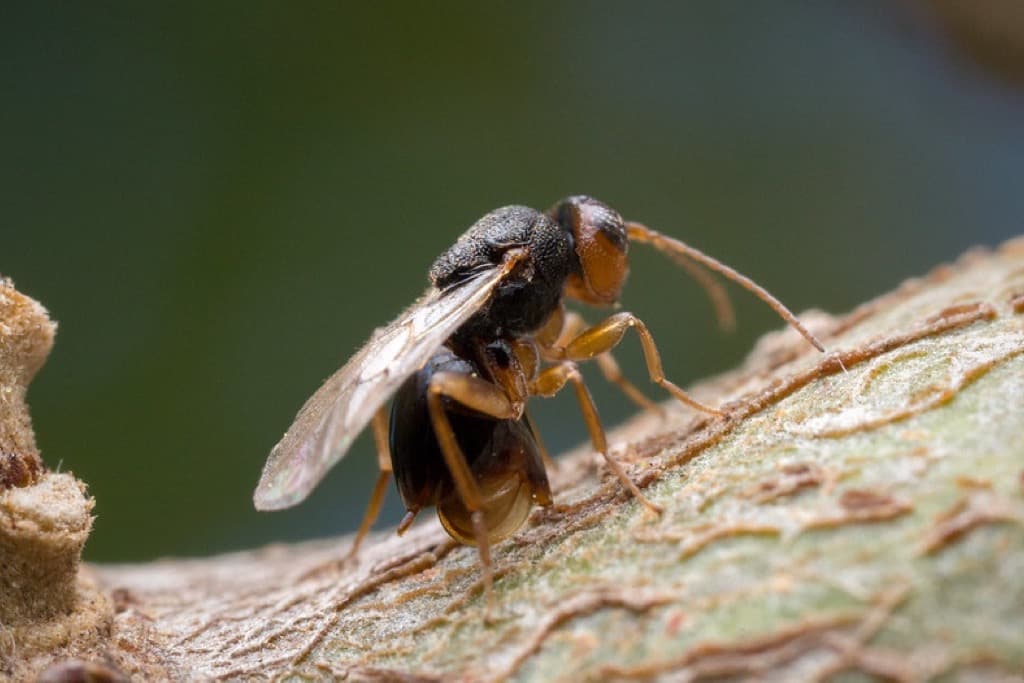
- Parasitic wasps provide substantial natural control of caterpillars and aphids
- Native solitary bees are important pollinators and are frequently mistaken for wasps
- Honeybees require a beekeeper, not a pesticide, and should never be treated
- Paper wasps are meaningful caterpillar predators and defend only a small radius
Accurate identification before treatment is the single largest environmental improvement available in this category. Most of what people want to eliminate does not need eliminating.
Prevention Does The Heavy Lifting
Every nest prevented is a treatment avoided. Physical prevention has no environmental cost at all and is permanent, which conventional treatment is not.
Seal in winter. Colonies are dead from roughly December through March. That is the window to close siding gaps, screen attic and soffit vents, seal utility penetrations, and repair damaged fascia — the sites queens use in spring.
Inspect in April and May. A queen founding a nest works alone for weeks. A nest found at that stage can often be removed physically with no product at all.
Remove old nests. Residual pheromone attracts new queens to proven sites. Taking down last year's nest in winter reduces next year's odds.
Manage water. In northern Nevada's dry summers, water sources concentrate wasp activity more than food does. Fixing a leaking hose bib or adjusting a sprinkler can move activity away from a patio entirely.
Manage waste and food. Sealed bins, rinsed recycling, covered pet food, and prompt cleanup after outdoor meals sharply reduce late-season scavenging pressure.
Physical Removal Where It Is Safe
Early-season paper wasp nests in accessible locations can be removed mechanically — knocked down at night with a pole, then the site cleaned so it does not get rebuilt on.
This works only under specific conditions: small nest, early season, paper wasp rather than yellowjacket or hornet, below shoulder height, and nobody in the household allergic. Outside those limits it is not an eco-friendly approach, it is an unsafe one.
Targeted Treatment When Treatment Is Needed
When a nest genuinely has to be treated, three choices determine the environmental footprint.
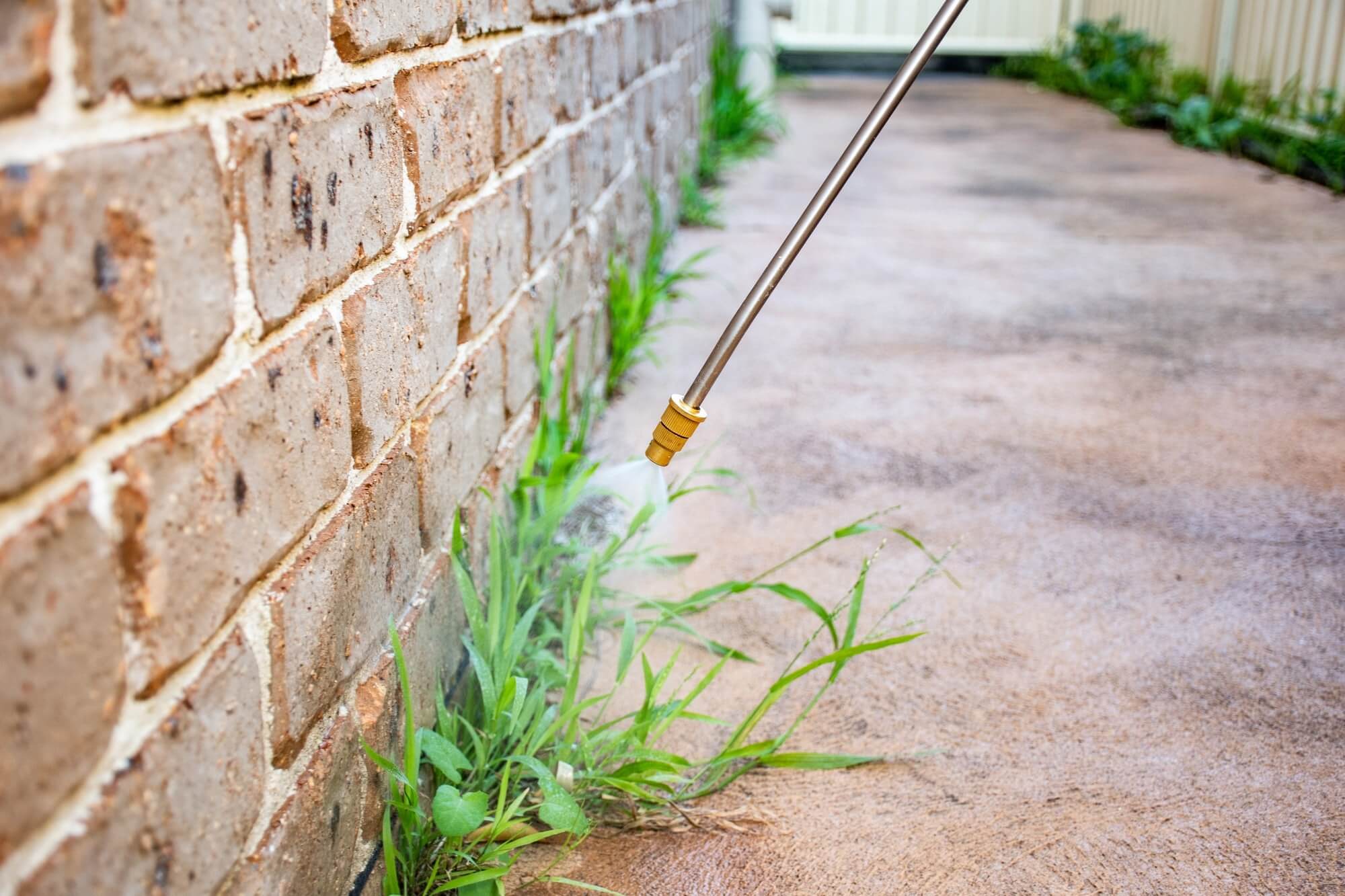
Treat the nest, not the area. Nest-directed application uses a fraction of the material that perimeter or broadcast spraying does, and confines it to the target.
Treat at night. The full colony is home, inactive, and clustered. That produces a complete result in one application rather than repeated attempts, and it avoids exposing daytime pollinators visiting nearby flowers.
Treat once, correctly. Repeated partial treatments with consumer products put far more total material into the environment than a single properly executed one. The "greener" option is frequently the professional one, for exactly this reason.
What To Be Skeptical Of
Several popular natural approaches do not hold up:
Peppermint and essential oil sprays. May briefly repel individuals. Do not affect an established colony. Applied repeatedly in volume, they are not environmentally neutral either.
Decoy nests. The premise is territorial avoidance. Field results are inconsistent at best, and relying on one can mean a real nest is established before anyone checks.
Soapy water on large nests. Works on very small, accessible paper wasp nests. On a mature yellowjacket or hornet nest it produces a partial kill and a fully alerted colony, which is a dangerous outcome.
Sealing an occupied void. Not a treatment. It drives the colony inward, frequently into living space.
Living With What You Can
Not every nest needs to go. A paper wasp nest under a shed eave, twenty feet from anywhere anyone walks, is doing useful predatory work and presents minimal risk.
Reserving intervention for nests that create genuine risk — near doors, walkways, play areas, and work zones, or in voids and underground — reduces total treatment substantially while addressing the actual hazard.
What This Looks Like In Practice
Seal in winter. Inspect in spring. Identify before acting. Remove physically where it is safe. Treat precisely, at night, once, where treatment is warranted. Leave the beneficial species alone.
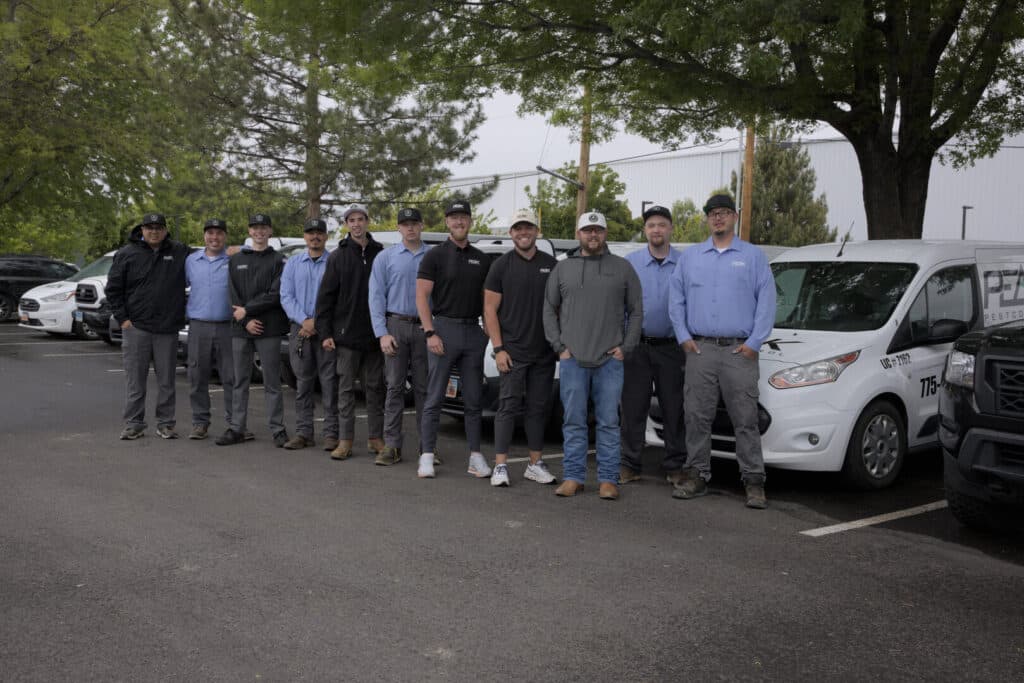
Peak Pest Control uses targeted, lower-impact methods across Reno, Sparks, and northern Nevada. If you want stinging insects handled without blanket spraying, contact us at (775) 446-6199.
Dealing with this pest at your place?
Peak serves Reno, Sparks, and northern Nevada with free inspections and a re-treatment guarantee. Get an honest quote, no pressure.
Aspen Chournos
Aspen Chournos writes about high-desert pest pressure and prevention for homes and businesses across Reno, Sparks, and northern Nevada.