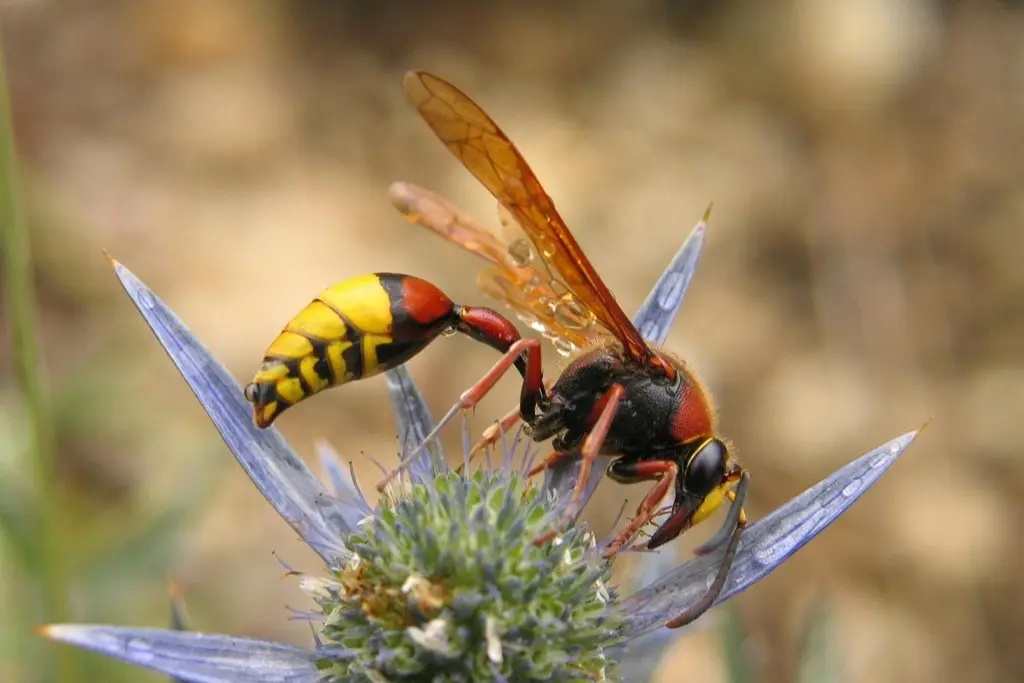
Mostly, no. The hornets you see around northern Nevada homes, bald-faced hornets and their yellow jacket cousins, are daytime insects. They forage while it's light and warm, head back to the nest around dusk, and spend the night inside it.
That doesn't mean a nest is harmless after dark. Here's what hornets are actually doing at night, and what that means if one has built on your house.
Do Hornets Sleep at Night?
Not the way we do, but they do rest. As the light fades and the temperature drops, the workers come home and the colony slows down. Insects go through rest periods where they move less and respond more slowly, and hornets are no exception.
Resting is not the same as defenseless, though. Some workers stay near the entrance overnight, and a colony that gets bumped, sprayed, or lit up with a flashlight can still pour out and sting.
Why a Nest Is Full at Night
During the day, a large share of the colony is out hunting insects and collecting sugar. After dusk, nearly every worker is home. A nest that looked quiet at noon can hold several hundred hornets by late summer, and at night they're all there at once.
That's why professionals often treat nests late in the day: the product reaches the whole colony instead of missing the foragers who are out. It's also why knocking down a nest yourself at night is a bad idea. You're disturbing the nest at the one time every defender is inside.
The Exception You May Have Read About
Some articles say hornets are attracted to porch lights and fly at night. That's the European hornet, a large species that does fly after dark. It's established in the eastern United States, not in northern Nevada. If something is bumping into your porch light in Reno or Sparks, it's far more likely to be a moth or a beetle.
Where Hornets Nest Around Reno Homes
- Bald-faced hornets build gray, papery, football-shaped nests in trees, shrubs, and under eaves.
- Yellow jackets often nest underground in old rodent burrows, or inside wall voids and sheds.
- Paper wasps, often mistaken for hornets, build open, umbrella-shaped combs under eaves, decks, and play structures.
Nests start small in spring and peak in late summer, which is when colonies get the most defensive and when most stings happen.
Are Hornets Dangerous?
A single sting is painful but not dangerous for most people. The real risks are a disturbed nest, where you can be stung many times at once, and stings in anyone with a venom allergy. Unlike honey bees, hornets can sting more than once.
Away from the nest, a foraging hornet usually ignores you. Near the nest, stay well clear and keep kids and pets back.
Should You Remove a Hornet Nest at Night?
For most homeowners, no. Night removal puts you at the nest when it's fullest, with poor visibility and a ladder in the dark. Small, early-season nests that are easy to reach are a different story, but anything larger than a fist, high up, inside a wall, or in the ground is worth a call.
If you've found a hornet or yellow jacket nest around your Reno or Sparks home, Peak Pest Control can locate it, treat the whole colony, and treat the eaves so it doesn't get rebuilt. Call (775) 446-6199.
Dealing with this pest at your place?
Peak serves Reno, Sparks, and northern Nevada with free inspections and a re-treatment guarantee. Get an honest quote, no pressure.
Aspen Chournos
Aspen Chournos writes about high-desert pest pressure and prevention for homes and businesses across Reno, Sparks, and northern Nevada.