
Spiders are strict predators. They do not feed on plants at any life stage. So the connection between weeds and spider populations is entirely indirect — and understanding that indirection is what makes it actionable.
The Chain, In Order
It works in three steps.
Weeds support herbivorous insects. Aphids, leafhoppers, thrips, plant bugs, and a long list of others feed directly on foliage, stems, and seed heads. A diverse weed population supports a diverse insect population.
Those insects support other insects. Small flies, gnats, and predatory species arrive to exploit them. Decaying plant material at ground level supports springtails and sowbugs.
All of them support spiders. A weedy area concentrates prey to a density spiders can exploit efficiently, which is why spider counts in unmanaged vegetation run substantially higher than in adjacent maintained ground.
Remove the first link and the rest contracts on its own.
Moisture Does As Much Work As Food
Prey availability is only half of it. The other half is humidity.
Northern Nevada is dry. Spiders lose water through their cuticle and need to manage that, particularly in summer. Dense vegetation traps humidity at ground level and shades the soil, holding moisture long after open ground has dried.
That microclimate is why weedy areas support ground-hunting species like wolf spiders so well. It is comfortable habitat in an environment that otherwise is not.
Web Architecture Needs Structure
Web-building species have a second requirement: anchor points.
Open ground provides nothing to build on. Weeds provide an abundance of stems, seed heads, and branching structures at exactly the spacing orb weavers and funnel weavers need. A weedy fence line can carry dozens of webs across a short span.
This is also why webs cluster in specific places — around shrubs, along fences, in tall grass — rather than distributing evenly across a property.
Why This Ends Up Indoors
Spiders in a weed patch fifty feet away are not your problem. Spiders in the weed patch against your foundation are.
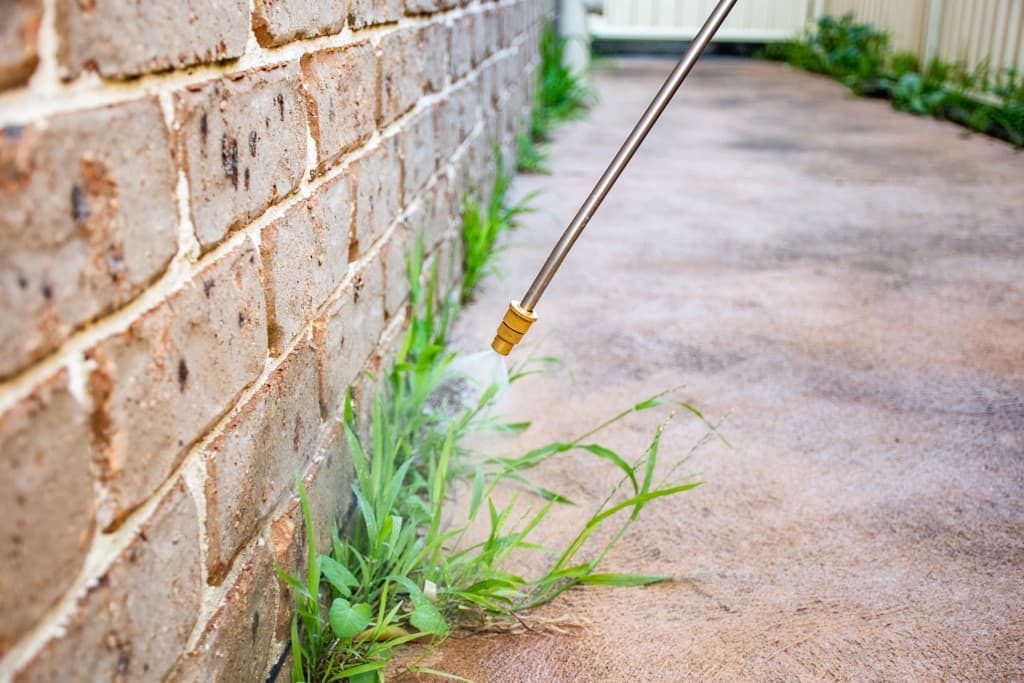
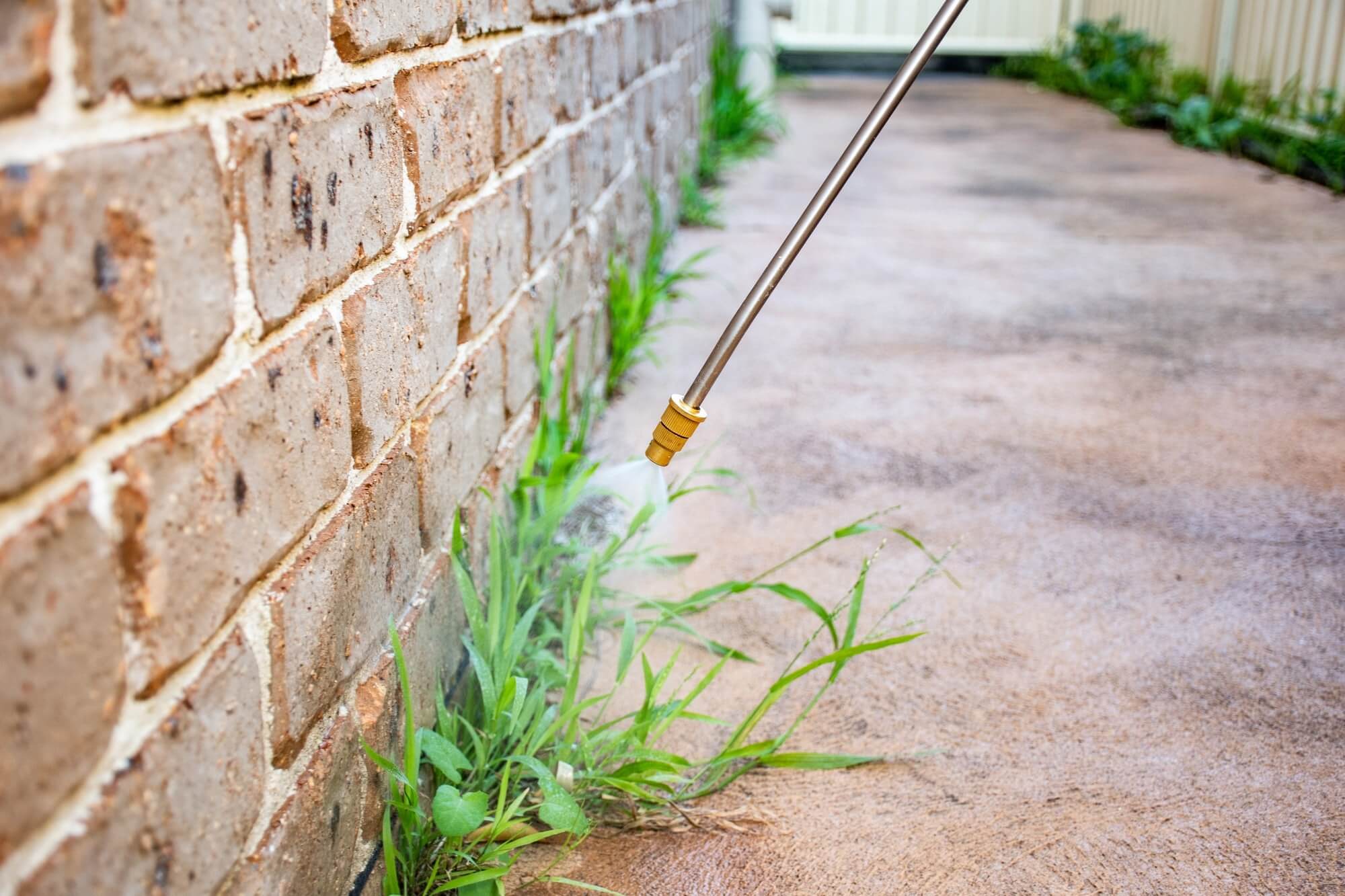
Ground-dwelling species enter structures at ground level, through the same gaps everything else uses. Vegetation growing to the wall gives them cover right up to the entry point and removes any exposed ground they would otherwise have to cross.
Weeds against the foundation also bypass perimeter treatments, which only work if pests have to travel across the treated band.
The practical result is that spider sightings indoors correlate strongly with vegetation conditions in the first few feet around the structure — much more strongly than with conditions elsewhere in the yard.
What Changes When You Control Weeds
Weed control reduces spider pressure through several mechanisms at once:
- Prey insect populations drop as their host plants are removed
- Ground-level humidity falls, making the area less habitable
- Web anchor structures disappear
- The protected corridor from the property edge to the foundation is broken
- Perimeter treatments become effective again
- Remaining activity becomes visible and easier to address
That combination is why properties on a weed control program typically see fewer spiders than treatment alone would predict.
Where To Focus
Not all vegetation matters equally. Priority order:
The foundation band. The first 18 inches to two feet against the structure. Highest impact by a wide margin.
Fence lines and property edges. Usually the origin of the corridor and usually neglected because they are out of sight.
Around outbuildings. Sheds, detached garages, and storage structures accumulate spider populations that then spread.
Under decks and elevated structures. Shaded, humid, undisturbed, and rarely inspected.
Irrigated beds against walls. The combination of moisture, vegetation, and wall contact is the worst case.
Practical Steps
- Keep a maintained clear zone against the foundation
- Control weeds along fences and edges, not only in visible areas
- Trim ornamental plantings so they do not touch the structure
- Adjust irrigation so it is not wetting walls or the perimeter band
- Clear leaf litter, debris, and stored material from near the building
- Reduce or warm-tone exterior lighting, which draws the night-flying insects spiders position themselves to catch
Combining Weed And Pest Control
Handled separately, weed control and spider control each solve part of the problem. Handled together, they address both the population and the habitat sustaining it — which is why the results hold longer.
Peak Pest Control provides both across Reno, Sparks, and northern Nevada. If spider activity around your property is heavier than you would like, contact us at (775) 446-6199 and we will look at what is supporting it.
Dealing with this pest at your place?
Peak serves Reno, Sparks, and northern Nevada with free inspections and a re-treatment guarantee. Get an honest quote, no pressure.
Aspen Chournos
Aspen Chournos writes about high-desert pest pressure and prevention for homes and businesses across Reno, Sparks, and northern Nevada.